
Month-End Reports: Why They Matter and How to Prepare Them
October 19, 2026
As the calendar year comes to a close, many business owners and individuals find themselves focused on holiday plans, year-end projects, and preparing for the new year. Unfortunately, taxes are often pushed to the bottom of the priority list until filing season arrives. By then, many valuable tax-saving opportunities have already disappeared.
The reality is simple: the best time to reduce your tax bill is before December 31, not after.
In this guide, Mergix Accounting and Tax, an accounting firm in Denver serving businesses and families across Colorado, explains what to review before the year ends.
Tax Planning vs. Tax Preparation
Many people think tax planning and tax preparation are the same thing. They are not.
Tax preparation is looking backward and reporting what happened during the year.
Tax planning is looking forward and making strategic decisions before year-end that can legally reduce your tax liability.
Proactive tax planning gives you the opportunity to control the outcome instead of simply accepting it when your tax return is prepared.
Why Small Business Owners Should Plan Before Year-End
If you operate an LLC, S-Corporation, or Partnership, your business income generally flows through to your personal tax return. This means your business results directly impact your personal tax situation.
Waiting until tax season often leaves business owners saying:
- "I didn't realize I owed that much."
- "I wish I had purchased the equipment before year-end."
- "I should have made that retirement contribution."
- "I didn't know my profit was that high."
Year-end planning helps eliminate surprises and gives you time to make informed decisions.
Take Advantage of Business Deductions
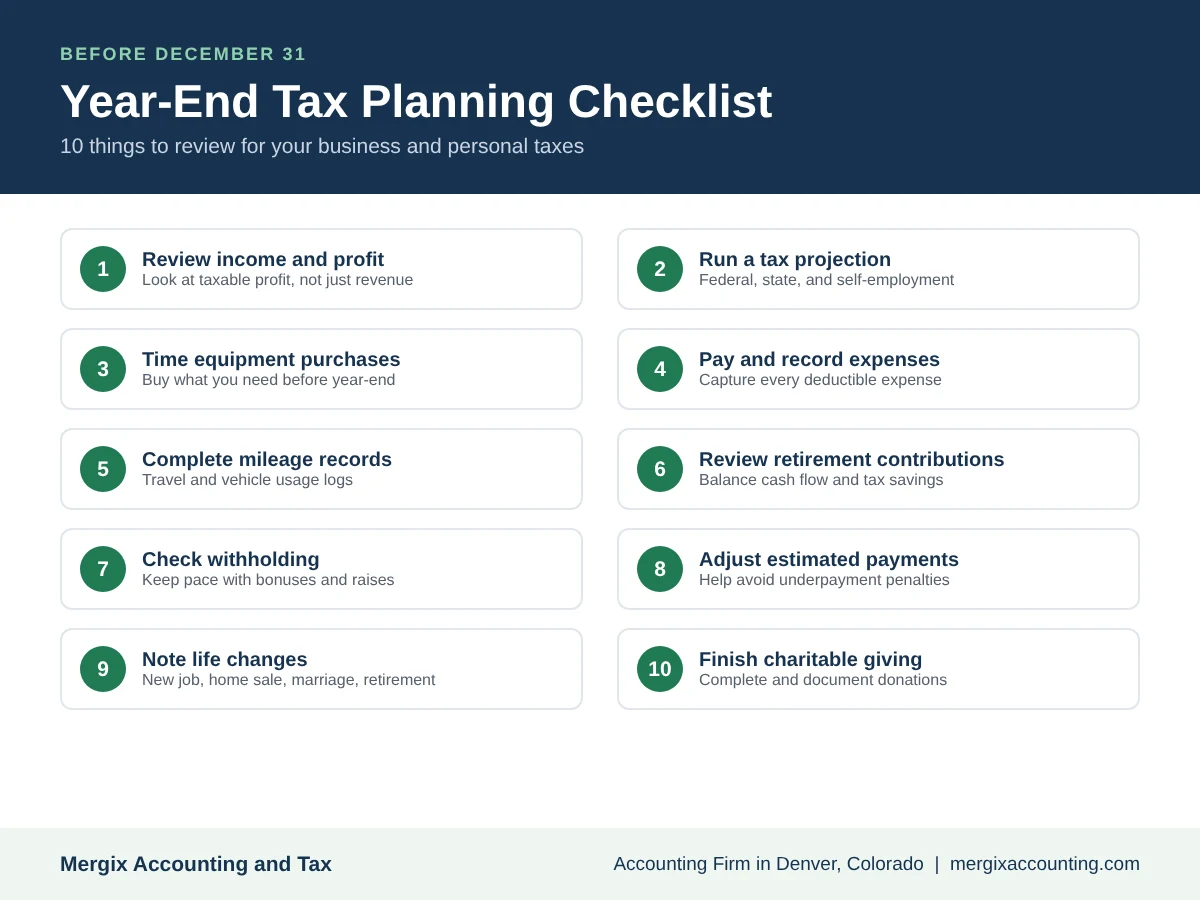
Before year-end, business owners should review purchases, operating expenses, and planned investments.
Questions to consider include:
- Are there necessary equipment purchases that should be made before year-end?
- Are there business expenses that can be paid before December 31?
- Have all deductible expenses been properly recorded?
- Is mileage, travel, and vehicle usage documentation complete?
Even small deductions can add up significantly over the course of a year.
Review Cash Flow and Tax Liability
Many small business owners focus heavily on revenue but pay less attention to taxable profit.
A year-end tax projection can provide estimates of:
- Federal tax exposure
- State tax exposure
- Self-employment taxes (when applicable)
- Potential estimated tax payment requirements
Knowing these numbers before year-end allows business owners to make adjustments rather than being surprised by a large tax bill in the spring.
Evaluate Retirement Contributions
For business owners, retirement contributions can serve two important purposes:
- Building long-term financial security
- Potentially reducing taxable income
Year-end is an excellent time to determine whether additional retirement contributions align with both cash flow and tax-saving goals.
Why Individuals Benefit from Year-End Tax Planning
Tax planning isn't just for business owners.
Employees, retirees, investors, and families can all benefit from reviewing their financial situation before the end of the year.
Avoid Unexpected Tax Bills
Life changes can significantly impact taxes, including:
- Job changes
- Bonuses or commissions
- Investment income
- Real estate transactions
- Retirement distributions
- Marriage or divorce
A year-end review can identify potential issues before they become expensive surprises.
Review Withholding and Estimated Payments
One of the most common tax problems occurs when withholding doesn't keep pace with income.
A year-end checkup can help determine whether:
- Additional withholding is needed
- Estimated tax payments should be adjusted
- Tax underpayment penalties may be avoided
Consider Charitable Giving
For taxpayers who already support charitable causes, year-end is a natural time to review planned donations and ensure contributions are completed before the end of the year.
Proper documentation and timing are important to maximize available tax benefits.
The Value of Looking Ahead
Perhaps the biggest benefit of tax planning is clarity.
Instead of guessing what your tax bill might be, you can make informed decisions based on real numbers. Whether you're operating a growing LLC, managing an S-Corporation, participating in a Partnership, or simply trying to make smarter personal financial decisions, year-end planning turns uncertainty into strategy.
Don't Wait Until Tax Season
By January, most tax-saving opportunities for the previous year are already gone. That's why October, November, and December are often the most important months for effective tax planning.
A proactive year-end review can help you:
- Identify tax-saving opportunities
- Improve cash flow planning
- Avoid unexpected liabilities
- Make smarter business and financial decisions
- Start the new year with confidence
The most successful taxpayers aren't necessarily those who earn the most. They're often the ones who take the time to plan ahead.
The best tax return is the one that was strategically planned before the year ended.
Frequently asked questions about year-end tax planning
What is the difference between tax planning and tax preparation?
Tax preparation is looking backward and reporting what happened during the year. Tax planning is looking forward and making strategic decisions before year-end that can legally reduce your tax liability.
When is the best time for year-end tax planning?
By January, most tax-saving opportunities for the previous year are already gone. That's why October, November, and December are often the most important months for effective tax planning.
Is tax planning only for business owners?
Tax planning isn't just for business owners. Employees, retirees, investors, and families can all benefit from reviewing their financial situation before the end of the year.
How does business income affect my personal taxes?
If you operate an LLC, S-Corporation, or Partnership, your business income generally flows through to your personal tax return. This means your business results directly impact your personal tax situation.
What does a year-end tax projection include?
A year-end tax projection can provide estimates of federal tax exposure, state tax exposure, self-employment taxes (when applicable), and potential estimated tax payment requirements.
Who can help with year-end tax planning?
Mergix Accounting and Tax, a team of accountants in Colorado, helps business owners and individuals review their numbers before December 31.
Plan your year-end taxes with Mergix Accounting and Tax
As an accounting firm in Denver and Colorado Springs, Mergix Accounting and Tax helps business owners and individuals across Colorado plan ahead before the year ends.
In this article
Want to lower your tax bill before December 31?
Our Denver accounting firm helps businesses and individuals across Colorado plan ahead for tax season.
